
Introduction
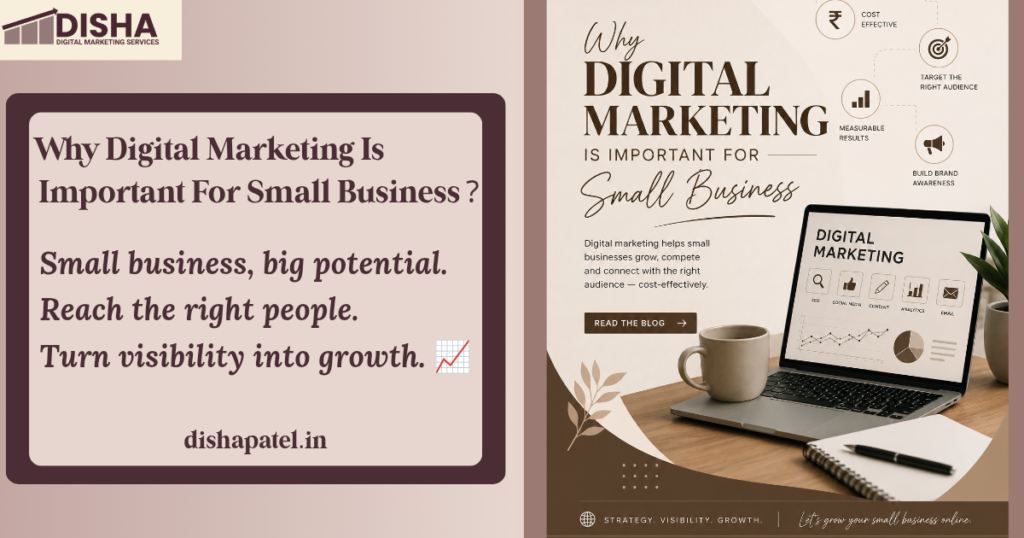
In today’s digital-first world, having a good product or service is no longer enough for a small business to succeed. Customers are increasingly using search engines, social media, websites, online reviews, and digital platforms to discover businesses, compare options, and make purchasing decisions. This is why digital marketing has become one of the most important growth strategies for small businesses.
Digital marketing allows small businesses to reach potential customers where they already spend their time—online. Whether it is through SEO, social media marketing, Google Ads, content marketing, email marketing, local SEO, or video marketing, businesses can build visibility, attract relevant audiences, generate leads, and increase sales.
Unlike traditional marketing, digital marketing also allows businesses to track their performance and make data-driven decisions. Even a business with a limited marketing budget can compete with larger companies by targeting a specific audience and creating valuable content.
Below are the key reasons why digital marketing is important for small businesses.
1. Helps Small Businesses Build Online Visibility
The first step toward attracting customers is being visible where they are searching.
Today, customers often search online before purchasing a product or contacting a service provider. For example, someone looking for a digital marketing agency may search for “digital marketing agency near me” or “best digital marketing agency in Mumbai.”
If your business does not have an online presence, potential customers may never discover you.
Digital marketing helps small businesses establish visibility through:
- Business websites
- Search engine optimization (SEO)
- Google Business Profile
- Social media platforms
- Online directories
- YouTube
- Online reviews
- Paid advertising
A strong online presence ensures that customers can find your business when they are actively looking for products or services you offer.
2. Digital Marketing Is Cost-Effective
One of the biggest advantages of digital marketing for small businesses is affordability.
Traditional marketing methods such as television advertisements, newspaper advertisements, billboards, and print campaigns can require significant investment. For a small business with a limited budget, these channels may not always provide a measurable return.
Digital marketing allows businesses to start small and scale gradually.
For example, a business can invest in:
- ₹300–₹500 per day in paid advertising
- Organic social media content
- SEO-focused blog articles
- Email marketing
- Local SEO
- Short-form videos
Businesses can monitor the results and increase their investment in channels that perform well.
This makes digital marketing particularly valuable for startups and small businesses that need to manage their marketing budgets carefully.
3. Helps Reach the Right Target Audience
Traditional advertising often reaches a broad audience, but not everyone who sees an advertisement is interested in the product or service.
Digital marketing provides much better targeting capabilities.
For example, a small fitness studio can target people based on:
- Location
- Age
- Interests
- Online behavior
- Search intent
- Previous interactions with the business
Similarly, a local restaurant can target people within a specific geographic area.
This means small businesses can spend their marketing budget reaching potential customers rather than a random audience.
4. Improves Local Customer Reach
For many small businesses, local customers are extremely important.
Restaurants, salons, clinics, gyms, coaching institutes, retail stores, real estate agencies, and service providers often depend on customers within a specific geographic area.
This is where local SEO becomes important.
A properly optimized Google Business Profile can help businesses appear in local search results and Google Maps when people search for relevant services.
For example:
“Best salon near me”
“Digital marketing course in Mumbai”
“Best bakery in Andheri”
When your business appears prominently for relevant local searches, you have a better opportunity to attract nearby customers.
5. Builds Brand Awareness
Customers usually do not become loyal to a business after seeing it once.
They need to see and interact with a brand multiple times before developing familiarity and trust.
Digital marketing helps businesses remain visible through consistent:
- Social media posts
- Blog content
- Videos
- Email newsletters
- Search results
- Advertisements
- Customer reviews
Over time, this consistent visibility helps create brand recognition.
For example, a small clothing brand can use Instagram Reels, SEO blogs, influencer collaborations, and paid advertising to introduce its products to potential customers.
Even if someone does not purchase immediately, repeated exposure can make the brand more familiar when the customer is eventually ready to buy.
6. Helps Build Customer Trust
Trust is one of the biggest factors influencing purchasing decisions.
Customers want to know:
- Is this business genuine?
- Are its products reliable?
- Do other customers recommend it?
- Does it have experience?
- Is the business responsive?
Digital marketing provides multiple ways to establish credibility.
Businesses can publish:
- Customer testimonials
- Google reviews
- Case studies
- Educational blogs
- Product demonstrations
- Behind-the-scenes content
- Frequently asked questions
- Expert advice
- Customer success stories
For example, a small digital marketing agency can publish case studies showing how it helped clients increase website traffic or generate leads.
This type of content provides evidence and helps potential customers feel more confident about making a purchase.
7. SEO Can Generate Long-Term Traffic
Search Engine Optimization (SEO) is one of the most valuable digital marketing strategies for small businesses.
SEO focuses on improving a website’s visibility in search engine results for relevant keywords.
For example, a Mumbai-based business might target keywords such as:
- Digital marketing course in Mumbai
- Best salon in Mumbai
- Website development company in Mumbai
- Interior designer in Mumbai
When a website ranks well for relevant searches, it can generate organic traffic without paying for every individual click.
SEO does require time, consistent content, technical optimization, and authority building. However, successful SEO can become a valuable long-term source of leads and customers.
8. Content Marketing Educates Potential Customers
Content marketing is another powerful strategy for small businesses.
Instead of constantly telling customers to “buy now,” businesses can create useful content that answers their questions and solves their problems.
Content can include:
- Blog posts
- Guides
- Videos
- Infographics
- Social media posts
- Case studies
- E-books
- FAQs
- Tutorials
For example, a small accounting firm could create articles such as:
“5 Tax Mistakes Small Businesses Should Avoid.”
Someone searching for this information may discover the firm’s website and eventually become a client.
This is how content marketing can turn information seekers into potential customers.
9. Social Media Helps Businesses Connect With Customers
Social media has transformed how businesses communicate with their audiences.
Platforms such as Instagram, Facebook, LinkedIn, YouTube, and other social networks allow small businesses to communicate directly with potential and existing customers.
Social media can be used to:
- Showcase products
- Share educational content
- Answer customer questions
- Announce offers
- Publish testimonials
- Share behind-the-scenes content
- Generate leads
- Build communities
For small businesses, social media can also make the brand feel more human and approachable.
10. Digital Marketing Generates Measurable Results
Another major advantage is the ability to measure performance.
Traditional advertising can make it difficult to determine exactly how many people saw an advertisement and how many became customers.
Digital marketing provides detailed data.
Businesses can monitor metrics such as:
- Website traffic
- Click-through rate
- Cost per click
- Leads generated
- Conversion rate
- Engagement rate
- Customer acquisition cost
- Return on ad spend
- Email open rate
This information helps business owners understand what is working and what needs improvement.
For example, if a Google Ads campaign is generating leads at a profitable cost, the business can increase its budget. If a campaign is producing clicks but no conversions, the business can investigate the landing page, offer, targeting, or messaging.
11. Helps Small Businesses Compete With Larger Brands
A common misconception is that small businesses cannot compete with established companies.
Digital marketing has changed this significantly.
A small business may not have the advertising budget of a large corporation, but it can compete by focusing on a specific niche or geographic market.
For example, instead of targeting the extremely competitive keyword:
“Digital marketing agency”
a small agency could focus on:
“Digital marketing agency for small businesses in Mumbai.”
This more specific approach can help businesses attract highly relevant audiences.
12. Increases Lead Generation
Digital marketing can create multiple opportunities for generating leads.
Businesses can use:
- Contact forms
- WhatsApp campaigns
- Landing pages
- Lead-generation advertisements
- Free consultations
- Downloadable guides
- Email newsletters
- Social media messages
For example, a small coaching institute can offer a free counselling session through a landing page.
Interested visitors provide their contact information, and the business can follow up with them.
This creates a structured process for turning online visitors into potential customers.
13. Supports Customer Retention
Digital marketing is not only about acquiring new customers.
It can also help businesses retain existing customers.
Email marketing, WhatsApp communication, loyalty programs, social media engagement, and personalized offers can keep customers connected with the brand.
For example, a restaurant can send existing customers information about:
- New menu items
- Special offers
- Events
- Loyalty rewards
- Seasonal promotions
Retaining existing customers can be highly valuable because satisfied customers may purchase again and recommend the business to others.
14. Allows Personalized Marketing
Digital platforms provide businesses with data that can help them understand customer behavior.
Businesses can use this information to create more relevant marketing messages.
For example, an online store can show different product recommendations based on previous browsing or purchasing behavior.
Similarly, an email campaign can be segmented according to customer interests.
Personalization can make marketing communication more relevant and improve customer engagement.
15. Helps Businesses Adapt Quickly
Digital marketing campaigns can be changed relatively quickly.
If an advertisement is not performing well, businesses can modify:
- The headline
- Creative
- Target audience
- Budget
- Landing page
- Call to action
Similarly, businesses can quickly respond to trends and customer feedback through social media.
This flexibility is particularly useful for small businesses because they can experiment with different approaches without committing to large traditional advertising campaigns.
16. Creates Opportunities for Word-of-Mouth Marketing
Satisfied customers can become powerful brand promoters.
Digital platforms make it easier for customers to:
- Leave reviews
- Share posts
- Recommend products
- Tag businesses
- Create user-generated content
- Refer friends
A positive review on Google or a customer sharing a product on Instagram can introduce a small business to new potential customers.
This creates a digital version of word-of-mouth marketing.
17. Provides a Competitive Advantage
If competitors are investing in SEO, social media, content marketing, and paid advertising while your business does nothing online, you may gradually lose visibility.
Digital marketing helps businesses stay competitive.
A strong strategy can help a small business identify:
- What competitors are doing
- Which keywords they target
- What content customers engage with
- Which social platforms perform best
- What offers attract customers
Businesses can then develop strategies that differentiate their brand.
18. Supports Business Growth and Scalability
Digital marketing allows a business to start with a small audience and gradually expand.
For example, a local business may initially target customers in one Mumbai neighbourhood. Once the marketing strategy proves successful, the business can expand its campaigns to other areas.
Similarly, an online business can use SEO, social media, and paid advertising to reach customers across India or even international markets.
This makes digital marketing an important tool for scalable growth.
How Small Businesses Can Start Digital Marketing
Small businesses do not need to use every digital marketing channel at once.
A simple strategy could start with:
Step 1: Build a Professional Website
Create a mobile-friendly website that clearly explains your products, services, pricing, location, and contact information.
Step 2: Optimize for Local SEO
Create and optimize your Google Business Profile and maintain accurate business information across relevant online directories.
Step 3: Start SEO
Research relevant keywords and create useful website content around the questions and problems your customers are searching for.
Step 4: Choose the Right Social Media Platforms
Instead of trying to be everywhere, focus on platforms where your target customers are most active.
Step 5: Create Valuable Content
Publish educational, informative, entertaining, or problem-solving content consistently.
Step 6: Experiment With Paid Advertising
Start with a controlled budget and test Google Ads or social media advertising.
Step 7: Track Your Results
Monitor traffic, leads, conversions, engagement, and advertising costs.
Step 8: Improve Continuously
Use your data to identify what works and invest more in successful strategies.
Conclusion
Digital marketing is no longer optional for most small businesses. It has become an essential part of building visibility, attracting customers, developing trust, and growing revenue.
The biggest advantage is that digital marketing gives small businesses access to tools that were once primarily available to large companies. Through SEO, content marketing, social media, local SEO, email marketing, and paid advertising, even a small business can reach a highly targeted audience and compete in a crowded market.
However, success does not come from simply creating social media accounts or running advertisements. Businesses need a clear strategy, consistent content, proper targeting, strong customer experiences, and continuous measurement.
For a small business, the goal should not be to use every digital marketing channel. Instead, identify where your target customers spend their time, understand what they are searching for, create valuable content, and build a marketing system around those needs.
Ultimately, digital marketing helps small businesses become more visible, more accessible, more trustworthy, and more competitive. When implemented strategically, it can turn online searches and interactions into meaningful relationships, qualified leads, and long-term customers.